How to Analyze a Rental Property (DSCR Explained Step-by-Step)
Not sure if a rental property is a good deal? This step-by-step guide breaks down DSCR, rental income, expenses, and key factors so you can invest with confidence and avoid costly mistakes.
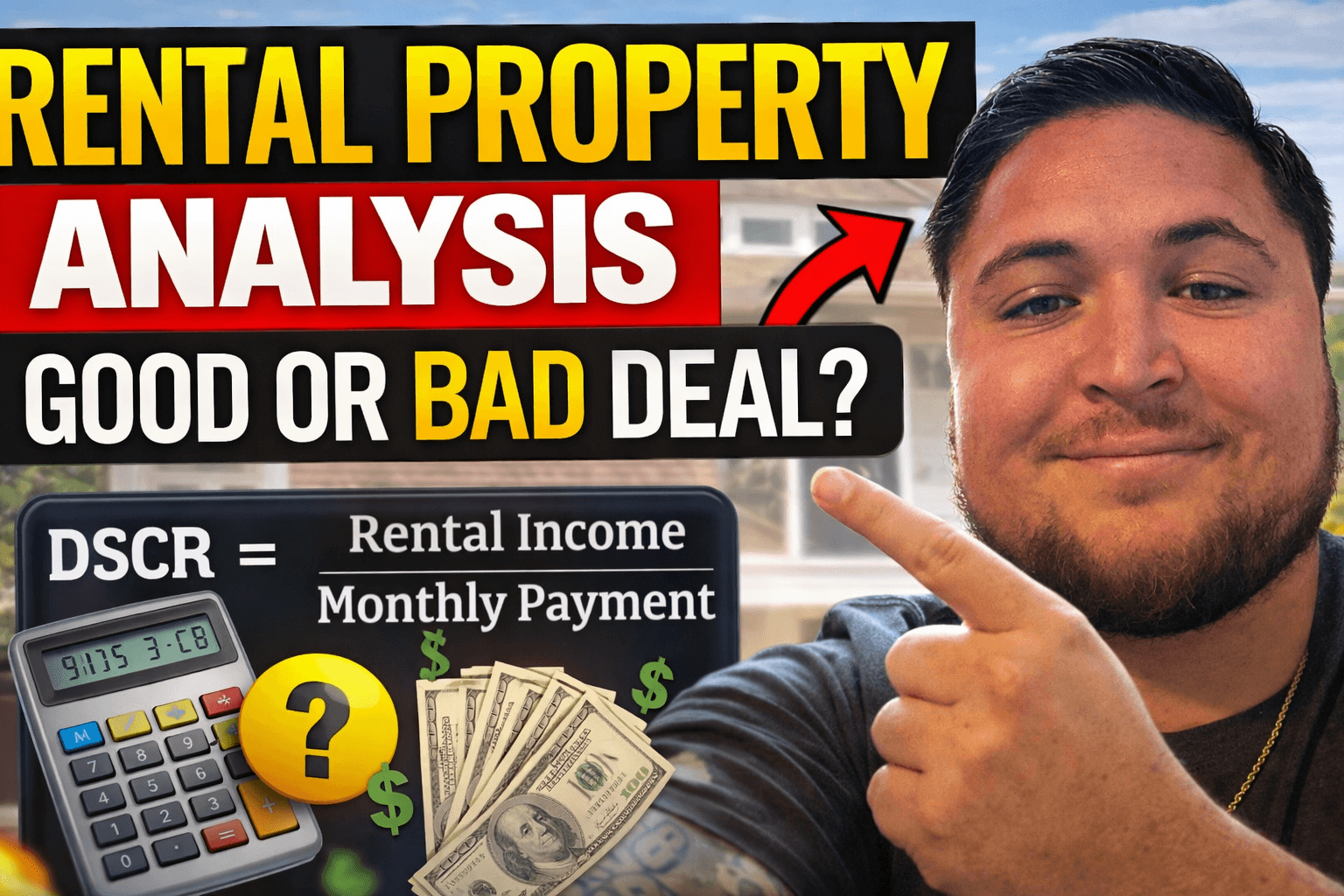
How to Analyze a Rental Property (DSCR Explained Step-by-Step)
Let Me Ask You a Question…
Have you ever looked at an investment property and thought:
“This looks like a great deal… but what if I’m missing something?”
That feeling is completely normal.
Real estate investing is one of the biggest financial decisions you can make—and naturally, you want to be confident that it makes sense in:
- A strong economy
- A weak economy
- And everything in between
In this guide, we’re going to break down exactly how to analyze a DSCR rental property step-by-step—and more importantly, how to remove the fear that comes with making the decision.
Who This Is Coming From
My name is Tanner Goktepe with Mortgage Skyhill, and I specialize in DSCR investment loans.
I work with investors every single day, and the most common question I hear is:
👉 “How do I know if this is a good rental property?”
Let’s break that down.
Step 1: Understand the Income (The Foundation)
Every rental property analysis starts with one thing:
👉 Fair market rental income
This is where many investors make their first mistake.
They either:
- Guess
- Or rely on Zillow estimates
Instead, here’s what you should be using:
✅ Appraisal (with rental schedule)
✅ Realtor market rent analysis
✅ Comparable rental properties
And here’s something many people don’t know:
👉 Some appraisals only show long-term rental income
👉 But if requested properly, you can also get:
- Short-term rental projections
- Airbnb / seasonal income analysis
The goal: Look at all possible income scenarios, not just one.
Step 2: Understand Your Expenses
Now let’s talk about the other side of the equation—your costs.
Your biggest expense will be your monthly mortgage payment, also known as:
👉 PITI (Principal, Interest, Taxes, Insurance)
But that’s just your fixed cost.
You also need to account for:
- Maintenance
- Repairs
- Vacancy periods
- Property management (if applicable)
👉 This is where many investors underestimate reality—and where deals can quickly go wrong.
Step 3: DSCR (The Most Important Metric)
This is the core of everything.
👉 DSCR (Debt Service Coverage Ratio) tells you if the property makes sense financially.
Here’s how to interpret it:
- DSCR = 1.0 → Break-even
- Above 1.0 → Positive cash flow
- Below 1.0 → Negative cash flow (you bring money in)
👉 Most lenders look for 1.0 – 1.25+
Once you understand this, you’re no longer guessing—you’re making a data-driven decision.
Step 4: Reserves (The Most Overlooked Factor)
One of the biggest mistakes investors make:
👉 Putting all their money into the deal… and leaving nothing behind.
That’s risky.
Just like any business, you need:
- A safety net
- Cash reserves
Because things will happen:
- AC breaks
- Roof issues
- Tenant turnover
👉 Smart investors—and lenders—always plan for this.
Step 5: Location & Long-Term Vision
So… is this actually a good investment?
No one can predict the future—but we can read the signs.
Look at trends over:
- 1 year
- 3 years
- 5 years
- 10 years
Ask yourself:
- Is the area growing?
- Are businesses expanding?
- Are there schools, hospitals, and shopping nearby?
👉 Growth leaves clues.
Step 6: Value-Add Strategy (Advanced Thinking)
This is how experienced investors separate themselves.
Instead of asking:
👉 “Is this property good?”
They ask:
👉 “How can I make this property better?”
Examples include:
- Renovations
- Upgrades
- Better property management
- Increasing rent
👉 If you can force appreciation, you win twice:
- Higher property value
- Higher rental income
Step 7: Good Times vs. Bad Times (Overcoming Fear)
Let’s address the biggest concern:
👉 “What if the market crashes?”
Here’s the reality:
We don’t control the economy.
But we do know this:
👉 People always need a place to live.
- In strong markets → tenants upgrade
- In weaker markets → tenants still need housing
Yes, rents may fluctuate—but demand for housing never disappears.
Step 8: Running Costs & Management
Another important question:
👉 “What are the real ongoing costs?”
It depends on your portfolio:
- 1 property → you can self-manage
- Multiple properties → you may need management
The key is simple:
👉 Stay proactive
- Fix small issues early
- Avoid expensive problems later
Final Thoughts: What Makes a Good Investment Property?
At the end of the day, a strong rental property comes down to:
✔ Rental income
✔ Expenses
✔ DSCR ratio
✔ Reserves
✔ Location
✔ Long-term vision
If you understand these six factors…
👉 You are already ahead of 90% of investors.
Need Help Analyzing a Deal?
If you’re currently looking at a property and you’re unsure…
👉 I’ll personally review it with you.
We’ll break down:
- Rental income
- DSCR
- Loan options
- Real numbers
So you can move forward with confidence.
Reach out directly—let’s analyze your deal together.
(813)-568-2291 or (813)-919-9925
www.mortgageskyhill.com